
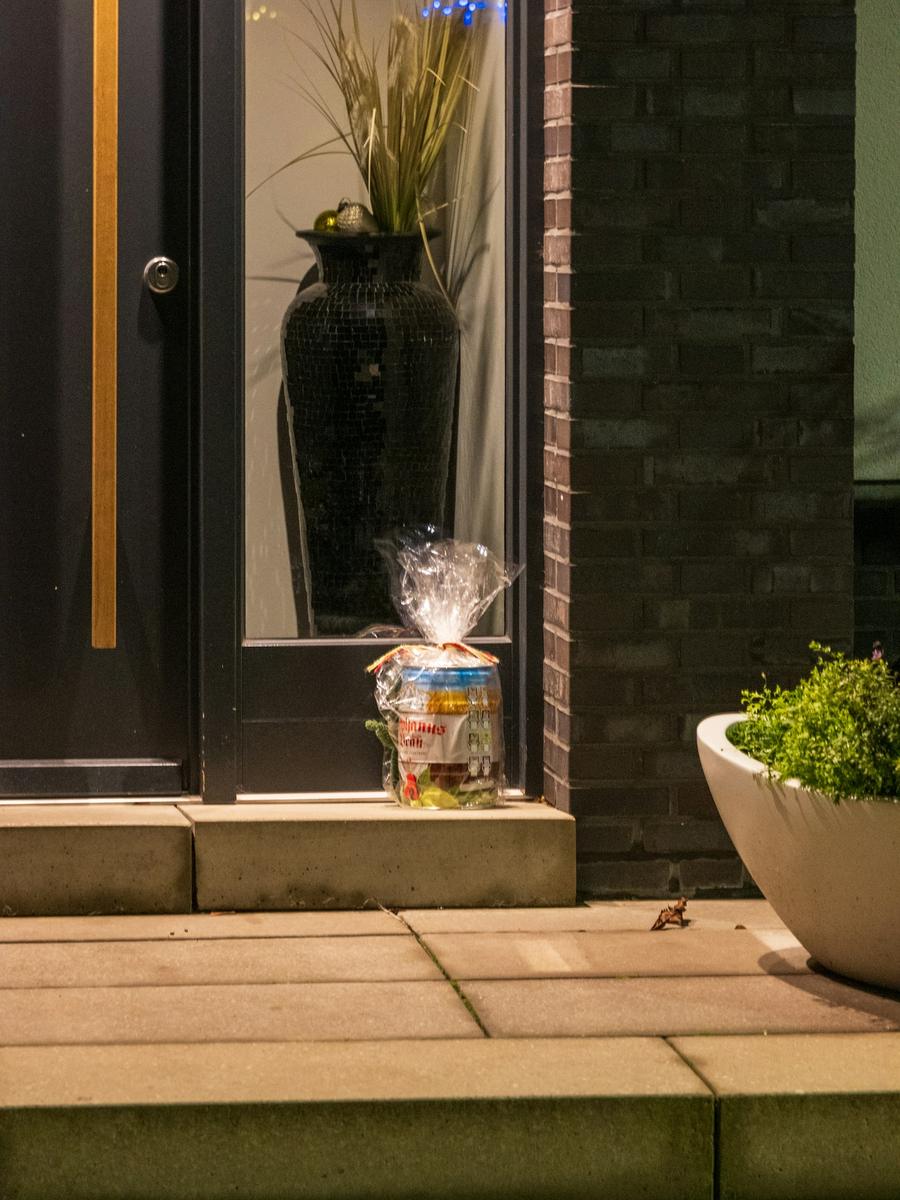
At 2:14 on a Tuesday afternoon, a UPS driver in Denver scans a box as delivered, drops it by a front door, and moves on. At 6:40 that evening the customer gets home, finds nothing, and sends the email every online store has read a thousand times: “Tracking says delivered but I never got it.”
What happens in the next 48 hours decides three things: whether that customer ever buys again, whether the store eats a replacement it did not need to, and whether a fraud pattern gets caught on its first attempt or its fifth. Most stores handle those 48 hours with a gut feeling and an apology. This piece is about handling them with a sequence.
- Why a delivered scan is a driver’s action, not a customer’s receipt
- The five things that happen to “missing” parcels, and how often each one is theft
- What the delivery photo, the scan location and the filing time each tell you
- A waiting period that filters the noise without punishing the honest
- The outcome that keeps the customer when the parcel really is gone
A scan is not a handover
The delivered scan is the moment a parcel leaves a driver’s hands. That is all it is. It is not the moment a customer takes possession, and the gap between the two is where every one of these claims lives.
Talk to anyone who has run a support queue for a year and they will give you the same list of what actually happened to a parcel that was “never received”:
- It was pre-scanned. On a heavy route, some drivers scan a batch as delivered before they finish the block. The box arrives later that evening, or the next morning, and nobody ever mentions it again.
- It went somewhere sensible. A side door, a porch behind a planter, the building’s mailroom, the neighbour who signs for everyone. The customer looked at the front step and stopped.
- It went next door. 1214 and 1241 are one transposition apart. The parcel is on a porch thirty metres away with the wrong name on it.
- Someone in the house has it. A roommate, a teenager, a receptionist. Nobody said anything.
- It was taken. Delivered correctly, visible from the street, gone within the hour.
The first four resolve themselves inside a day. Stores that ship replacements the same afternoon send a lot of second parcels to people who now have two. That is the argument for a waiting period, and it is the whole argument: not suspicion of the customer, but respect for how parcels actually move.
A photo of a parcel on a doorstep proves delivery. It does not prove receipt, and it does not prove the doorstep is the customer’s.
What the evidence says, item by item
When the claim does arrive, there are four pieces of evidence that carry nearly all of the weight. A person can read them in two minutes. Software can read them in two seconds. Either way, the order matters.
The proof-of-delivery photo
UPS, FedEx, Amazon Shipping, OnTrac and Canada Post photograph a large share of residential deliveries. The photo answers two questions. Does the doorstep in the picture look like the customer’s home? A returning customer’s earlier delivery photos make that comparison almost mechanical. And is the parcel visible from the street, or tucked out of sight? A box in plain view on a busy street is a different risk from one behind a screen door.
The scan location
USPS does not photograph deliveries, but it records where the parcel was left: “in/at mailbox”, “front door/porch”, “parcel locker”, “delivered to agent”. A mailbox or locker delivery is, in practice, very rarely stolen. A porch drop is the case that needs the other evidence.
The filing time
A claim filed twenty minutes after the delivered scan is a customer who checked tracking, saw “delivered”, and reacted. A claim filed two days later, after the waiting period, is a customer who looked, asked around, and came back. Neither is proof of anything. Both are signals, and they point in different directions.
The customer’s history
This is the one most stores never look at, because it lives across a dozen orders in a dozen tabs. Is this the first claim on a two-year order history, or the third “never arrived” this quarter? Does the shipping address match the last five delivered orders, or is it new, or is it a freight forwarder? History does not convict anyone. It decides who gets a fast yes and who gets a second look.
Putting a number on it
BuySure AI pulls those four pieces together into a risk score from 0 to 100 before a person opens the claim. A first-time claim, delivery photo showing a shared lobby, address matching three prior delivered orders, filed 26 hours after the scan: that is a 14. Low risk. If the store’s auto-approve limit is $150 and the order is $118, the replacement order is created in Shopify and the customer has an answer in minutes.
A third stolen claim in six weeks, a new shipping address, a photo showing the parcel in plain view on a front step, filed nine minutes after the scan: that is a 61. It goes to a person, with the factors listed and a recommendation to ask for a police report number before deciding. The AI does not reject it. A person does, or does not.
Run the numbers on a store shipping 4,000 orders a month with a 1.5% “not received” rate. That is sixty claims a month. If a person spends twelve minutes on each, that is twelve hours. If forty of the sixty are low-risk and resolve on their own, the same person spends four hours, on the twenty that deserve it.
The waiting period, set properly
Two to five days after the delivered scan is the range most stores land on, and it should vary by carrier. Where the carrier photographs deliveries, two or three days is enough; the photo answers most questions on day one. For USPS, where there is no photo and mailbox parcels are found late, three to five days is fairer. For community mailboxes and parcel lockers, a shorter wait is fine; theft from those is rare.
Whatever the number, the claim page should say it. “Stolen-parcel claims can be filed from three days after delivery” is one sentence that prevents a support ticket, an angry review and a chargeback. BuySure’s claim page validates the order first and tells the customer exactly when a claim will open if it is not open yet.
What to tell the customer in the meantime
Silence is the only unforgivable response. A customer who writes “never received” and hears nothing for a day assumes the worst about the store, not the carrier. The tracking page should already show them the scan detail and, where there is one, the photo. Most people who see “delivered, front door, 2:14 pm” with a picture of their own porch go and look again. Many find the box.
For the rest, a short, specific reply works: here is where the carrier says it left the parcel, here is the photo, please check these three places and ask your neighbours, and if it has not turned up by Thursday your claim opens here. That is not stalling. It is the same thing a good support agent would say, written once.
When it really is gone
If the parcel does not turn up, the customer wants the product more than the money. A replacement order in Shopify, shipped with signature required or to a pickup point, is the outcome that keeps them. Store credit with a bonus is a strong second. A refund is right when the item is out of stock, when the customer asks for one, or when the claim tells you this customer should not be a customer.
And the timeline should show all of it: when the claim opened, what the evidence said, what the score was, who decided and why. Six months later, when the same address files again, that record is the difference between a pattern and a coincidence.
Questions
How long should a store wait before accepting a stolen-parcel claim?
Two to five days after the delivered scan, longer for carriers that do not photograph deliveries. BuySure lets each store set its own waiting period per store, and the claim page explains it to the customer.
Should the customer file a police report?
For high-value parcels it is a reasonable thing to request, and the report number goes on the claim. For a $40 order it mostly delays an honest customer.
Can a store refuse a stolen claim when the photo shows the parcel at the door?
A photo proves delivery, not receipt. It raises the risk score and justifies a review, and it makes signature-required shipping a fair condition for a replacement. On its own it does not prove the customer is lying.
Does a carrier refund the store for a stolen parcel?
Almost never for theft after delivery. Carrier liability ends at the delivered scan. That is why package protection exists.