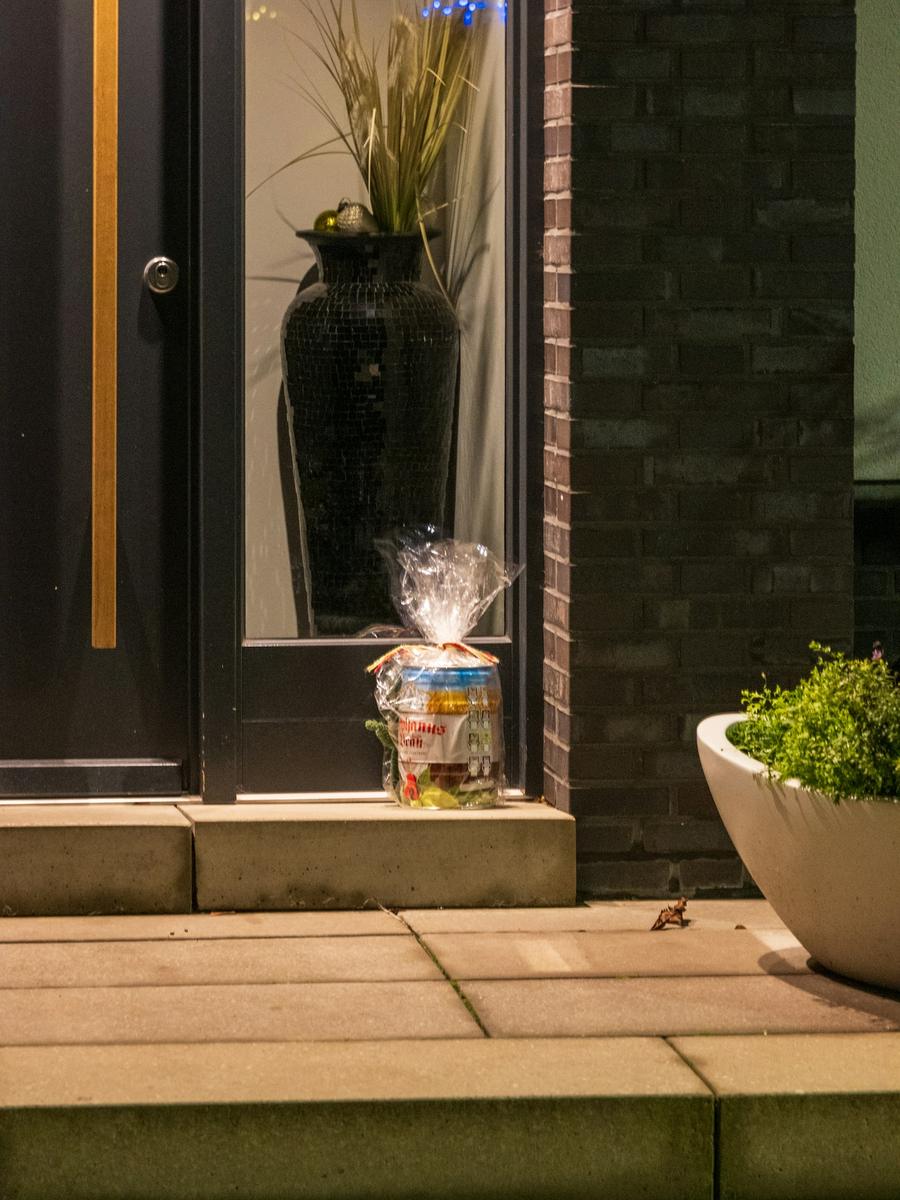

A merchant opens a claim and sees this: “First claim from this customer. Proof-of-delivery photo shows a shared lobby. Address matches three prior delivered orders. Filed 26 hours after the delivery scan. Score 14, low risk. Recommend: approve replacement, under your $150 limit.” Four facts, a number and a recommendation. This piece is about where those come from.
- The six things the AI reads on every claim, and which weigh most
- What a 14 allows and what a 61 does not
- Why the customer gets a score, not only the claim
- What the AI never uses, and what a person still decides
What it reads
A risk score is not a verdict. It is a summary of how much a claim resembles the honest majority and how much it resembles the small minority that is not. BuySure AI builds it from six sources, in roughly this order of weight.
1. The evidence
Does the photo show the item the order contains? Does the damage match the description: a cracked dropper in a “damaged” claim, an empty box in a “missing items” claim? Is the photo new, or has it appeared on another claim, at another store, on another day? Image reading is the part people find most surprising, and it is the part that catches the laziest fraud, because copied photos are copied.
2. The delivery data
For a stolen claim: the delivered scan, its location, the delivery photo where the carrier captured one, and how long after the scan the claim was filed. For a stuck claim: the last movement scan, its age, and whether that is normal for that carrier and service. For a damage claim: whether the carrier logged an exception on the way.
3. The order match
The email, the address, the items and the fulfilment all have to agree with the claim. A claim on an unfulfilled order, or from an email that is not on the order, fails here before anything else is read.
4. The customer’s history
Orders placed, claims filed, outcomes received, across the store’s whole history with that person. One claim in thirty orders is a customer with a bad day. Three claims in five orders is a pattern, whatever the photos say.
5. Address and device signals
Freight forwarders. Billing and shipping in different countries. A brand-new account whose first order produced a claim. A device that has filed claims under other names. None of these is proof of anything. Each one moves the number.
6. Duplicates
Same order, same item, second claim. It happens by accident more than by design, and either way it should be caught before it is paid twice.
Most fraud is not one clever claim. It is a pattern, and patterns are visible only if you look across orders, which a person reading one claim never does.
What comes out
A number from 0 to 100. The factors behind it, in plain words a merchant can read in ten seconds. And a recommendation: approve, send to review, or ask for more evidence. The recommendation is tied to the store’s own rules: the auto-approve limit, the routing for each claim type, the waiting periods.
What a 14 allows
A low score on a claim under the store’s auto-approve limit resolves the claim automatically, as the customer’s preferred outcome where the store allows it. A replacement order appears in Shopify. The customer gets a resolved claim and a reference. The timeline records the score, the factors and the action, so that in six months, when someone asks why this was approved, the answer is already written.
What a 61 does not do
It does not reject. A high score sends the claim to BuySure review or the merchant’s team with the factors attached and a suggestion, often “ask for a police report number” or “compare the delivery photo with the customer’s earlier orders”. Rejection is a human decision, always. The cost of a wrong rejection (a lost customer, a chargeback, a public review) is far higher than the cost of a wrong approval, and the system is built around that asymmetry.
Why score the customer too
Because most fraud is not a single clever claim. It is a person who has learned that a particular store pays out on “never arrived” and comes back for more. A customer score built from history means the third “never arrived” this quarter starts high before the claim is even read, and an honest customer with a long clean history starts low even on a large claim. The two scores are shown together; the claim score is what the limit is compared against.
What it never uses
Nothing outside the order, the claim, the carrier data and the store’s own customer history. BuySure does not buy third-party data about customers, does not read social profiles, and does not score people on anything they did not do in the store. The factors on a claim are all things the merchant could have looked up themselves, given an afternoon.
What a person still decides
Every rejection. Every claim above the limit. Every quality-issue claim, if the store routes them that way. Every override of a recommendation, which the timeline records with a name and a reason. The AI’s job is to make sure the person deciding has the evidence in front of them and does not spend their afternoon on the claims that did not need them.
Questions
Can merchants see and challenge the score?
Yes. Every claim shows the score and the factors. A person can override the recommendation either way, and the timeline records who did and why.
Does the AI learn from my decisions?
Your overrides are recorded on the claim and inform routing rules for your store. Rules you set always win over the recommendation.
Does the customer ever see their score?
No. The customer sees a claim status and an outcome. The score is a tool for the store.
What happens when the evidence is ambiguous?
The score lands in the middle and the recommendation is usually “request more evidence”. The customer gets a specific ask, not a rejection.